
There is a particular kind of loneliness that can happen inside a marriage. Two people may share a home, eat at the same table, sleep in the same bed, and coordinate everything from grocery shopping to school pickups—yet barely have a meaningful conversation.
Sometimes, couples do not completely stop talking. They still discuss bills, appointments, children, work schedules, and what needs to be done around the house. What disappears is the deeper communication: how they feel, what they need, what is bothering them, and whether they still feel connected.
When communication reaches this point, it does not automatically mean the marriage is over. But it does suggest that something important needs attention.
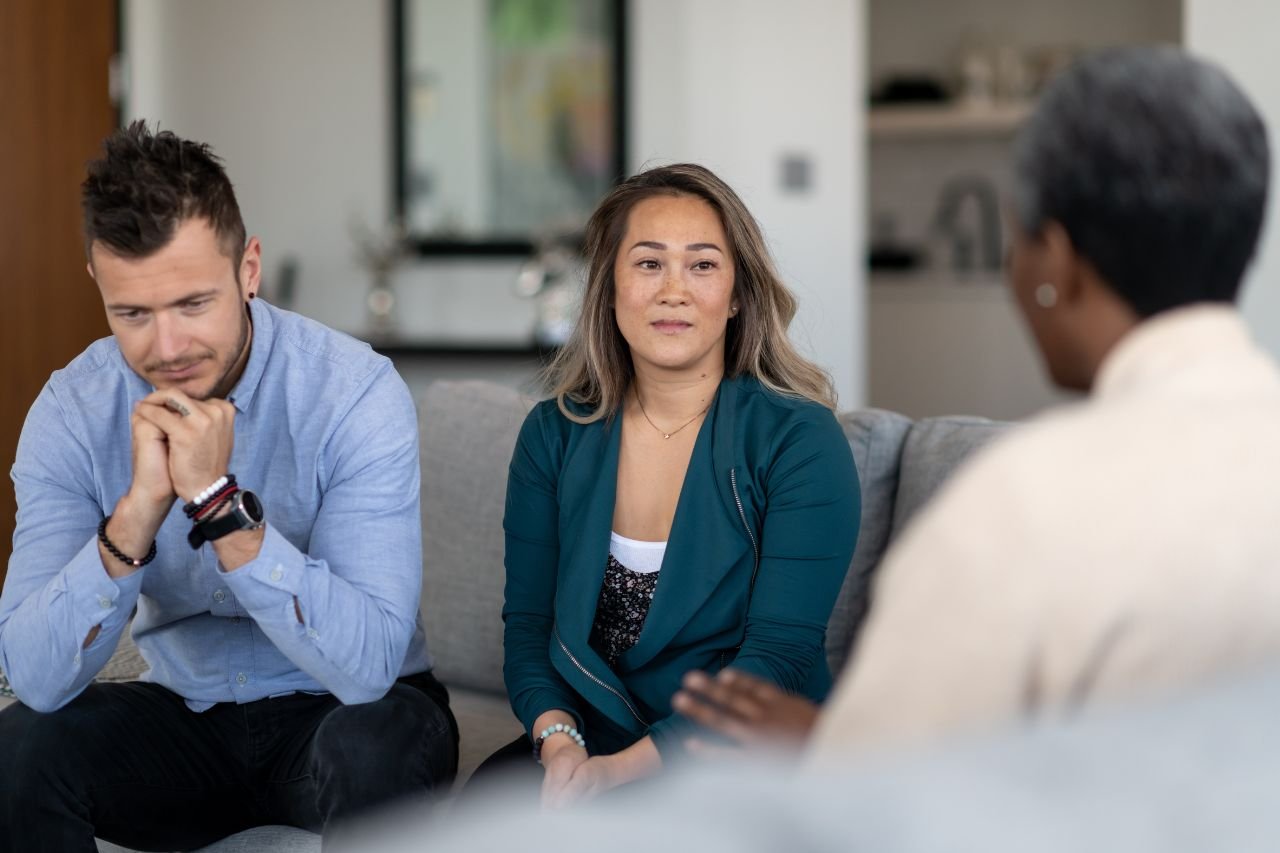
Marriage counseling can give couples a structured, neutral setting where they can understand what interrupted their communication, identify unhealthy patterns, and learn more productive ways to talk and listen to each other.
Why Do Married Couples Stop Talking?
Communication problems rarely appear overnight. More often, conversation gradually becomes less open because previous attempts to communicate have felt frustrating, exhausting, or unproductive.
One partner may think, “There’s no point bringing this up because we’ll just argue again.” The other may feel, “Nothing I say is ever understood correctly.”
Eventually, avoiding the conversation can seem easier than having it.
Several issues can contribute to this pattern.
Unresolved Arguments
Some couples repeatedly argue about the same subjects without reaching a resolution. Money, parenting, household responsibilities, intimacy, relatives, work, and trust can all become recurring sources of conflict.
After enough unsuccessful conversations, one or both partners may begin avoiding these subjects entirely.
Unfortunately, avoiding an unresolved problem does not necessarily make it disappear. Frustration can remain underneath everyday interactions and gradually contribute to emotional distance.
Fear of Conflict
Not everyone responds to disagreements in the same way.
One spouse might want to discuss a problem immediately, while the other needs time to process emotions. If these differences are misunderstood, a difficult pattern can develop.
The person seeking conversation may pursue harder because they feel ignored. The other person may withdraw further because they feel pressured.
Neither partner necessarily intends to hurt the other, but the pattern itself can make communication increasingly difficult.
Stress and Exhaustion
Sometimes the problem is not primarily the relationship.
Work pressure, financial worries, raising children, caregiving responsibilities, health concerns, and lack of sleep can leave people emotionally exhausted.
When both partners are operating in survival mode, meaningful conversation can slowly be replaced by practical exchanges:
“Did you pay the electric bill?”
“What time is soccer practice?”
“Can you pick up dinner?”
These conversations are necessary, but they cannot replace emotional connection.
Built-Up Resentment
Resentment can develop when someone repeatedly feels unheard, unsupported, unappreciated, or treated unfairly.
Eventually, that person may stop explaining how they feel because previous attempts seemed ineffective.
Silence then becomes less about having nothing to say and more about believing that saying it will not change anything.
Emotional Disconnection
Couples can also simply drift apart.
Careers become demanding. Children require attention. Personal interests change. Phones and other distractions consume free time.
Without intentional effort, partners who once talked for hours may eventually realize that they know surprisingly little about each other’s current thoughts, worries, hopes, or goals.
Silence Isn’t Always Peace
A quiet relationship can look peaceful from the outside.
There may be fewer arguments. Nobody is shouting. Daily responsibilities are getting handled.
But the absence of conflict does not necessarily mean the presence of connection.
Healthy relationships generally allow room for disagreement. Partners can express frustration, negotiate differences, apologize, and discuss uncomfortable subjects.
When couples avoid meaningful topics because they are afraid of triggering another argument, the apparent peace may actually be avoidance.
This distinction matters.
There is a significant difference between being comfortable enough to enjoy silence together and being silent because talking no longer feels emotionally safe or productive.
Signs Communication Has Become a Serious Problem
Every couple goes through quieter periods. A stressful week or busy month does not necessarily indicate a major relationship problem.
It may be worth paying closer attention, however, when the pattern becomes persistent.
Common warning signs include:
- Conversations are mostly about chores, children, bills, or schedules.
- One or both partners regularly avoid difficult topics.
- Small disagreements quickly become major arguments.
- One person shuts down whenever conflict begins.
- Sarcasm, criticism, defensiveness, or contempt frequently appears in conversations.
- Important feelings are shared with other people but rarely with a spouse.
- Partners make assumptions instead of asking each other questions.
- Problems remain unresolved because discussing them feels pointless.
- One or both partners feel lonely despite spending considerable time together.
- Affection and emotional or physical intimacy have noticeably decreased.
One sign alone does not define a relationship. What matters more is the overall pattern and whether both partners feel capable of discussing important issues constructively.
How Marriage Counseling Can Help Couples Communicate Again
One misconception about counseling is that a therapist simply decides which spouse is right.
That is generally not the purpose of couples therapy.
Instead, counseling can help partners examine the interaction patterns happening between them and develop healthier ways of responding.
Couples considering professional support can learn more about Marriage and couples counseling and how therapy may provide a structured environment for addressing communication difficulties, recurring conflicts, emotional distance, and other relationship concerns.
Here are several ways the counseling process can help.
1. Creating a Structured Space for Difficult Conversations
At home, difficult conversations can quickly follow familiar patterns.
One partner criticizes. The other becomes defensive. Someone raises their voice. Someone walks away.
A therapist can help slow the conversation down.
Instead of allowing an argument to follow its usual path, the counselor may help each partner identify what they are trying to communicate and how their words or reactions are affecting the conversation.
That structure can be especially useful when couples have tried repeatedly to solve the same problem on their own.
2. Identifying the Pattern Behind the Argument
Couples often believe they are fighting about individual issues.
The dishes.
Money.
Sex.
The in-laws.
Someone spending too much time on their phone.
But the visible disagreement may be connected to a larger emotional pattern.
For example, an argument about household responsibilities might involve deeper feelings of being unappreciated. A disagreement about spending could involve fears about security or differences in how each partner views money.
Counseling can help couples look beyond the immediate topic and explore the underlying needs, fears, expectations, and emotions driving repeated disagreements.
3. Learning How to Listen Without Preparing a Defense
Listening sounds simple until someone says something painful.
During conflict, people often listen primarily to prepare their response. They may mentally collect evidence, correct details, or think about how to defend themselves.
That makes genuine understanding difficult.
Couples counseling can introduce communication techniques that encourage partners to listen for meaning rather than simply waiting for an opportunity to respond.
Understanding does not require agreement.
A spouse can understand why something hurt their partner without necessarily sharing the same interpretation of what happened.
That distinction can change the tone of a difficult conversation.
4. Expressing Needs More Clearly
People sometimes expect their partners to recognize what they need without being told.
When that does not happen, disappointment follows.
Counseling can help people move away from accusations such as:
“You never care about what I need.”
Instead, they can learn to identify and communicate the specific behavior or emotional need behind the frustration.
A clearer version might be:
“When we don’t spend any uninterrupted time together during the week, I feel disconnected. I’d like us to make time for each other.”
The underlying concern may be similar, but the second approach gives the other person something concrete to understand and respond to.
5. Managing Conflict More Productively
The goal of marriage counseling is not necessarily to eliminate disagreement.
Two people can love each other deeply and still have different opinions, personalities, priorities, and habits.
The more realistic goal is learning how to disagree without damaging the relationship.
Couples may work on recognizing when a conversation is becoming too emotionally intense, taking appropriate breaks, avoiding personal attacks, staying focused on the current issue, and returning to unfinished conversations instead of abandoning them indefinitely.
Over time, conflict can become something partners navigate rather than something they automatically fear.
6. Rebuilding Emotional Connection
Communication is not only about solving problems.
Healthy relationships also need curiosity, affection, humor, appreciation, and everyday emotional connection.
When a marriage has become dominated by logistics or conflict, counseling may help partners rediscover the personal side of their relationship.
That could involve discussing what each person currently values, what makes them feel loved, how their needs have changed, or what they miss about the relationship.
After years together, it is easy to assume you already know everything about your spouse.
People continue changing, though.
Learning who your partner is now can be just as important as remembering who they were when you first met.
What If Only One Partner Wants Counseling?
This is a common concern.
One spouse may be ready to seek help while the other believes counseling is unnecessary, uncomfortable, or unlikely to work.
Trying to force someone into therapy may create additional resistance. A more productive conversation may focus on the specific problem rather than presenting counseling as proof that the relationship is failing.
For example, the concern might be framed around wanting conversations to feel easier or wanting both partners to understand each other better.
Individual counseling may also be useful when only one person is willing to participate. While one spouse cannot single-handedly control the relationship, changing how they respond to recurring patterns can sometimes affect the overall dynamic.
Don’t Wait Until Communication Completely Breaks Down
Couples therapy is sometimes viewed as the final stop before divorce.
It does not have to be.
Seeking counseling earlier may give couples an opportunity to address communication problems before resentment and emotional distance become deeply established.
Think of it less like calling an emergency repair service and more like addressing a problem when the warning light first appears.
A couple does not need to be in constant crisis to benefit from learning better ways to communicate.
Small Communication Changes Can Matter at Home
Professional counseling can provide valuable guidance, but couples can also begin making small changes in everyday life.
Set aside regular periods when phones, television, work, and household tasks are temporarily put away. Ask questions that go beyond schedules and responsibilities.
Instead of only asking, “How was your day?” try asking what felt stressful, interesting, frustrating, or enjoyable.
Another simple habit is expressing appreciation specifically.
“Thanks for everything” is nice.
“Thank you for handling dinner tonight when you knew I had a difficult day” communicates exactly what was noticed and appreciated.
Most importantly, try not to make every conversation about fixing something.
Relationships also need conversations that are simply enjoyable.
When Communication Problems Involve Safety
Not every relationship difficulty should be approached as an ordinary communication problem.
If a relationship involves physical violence, threats, coercive control, stalking, intimidation, or fear for personal safety, standard couples counseling may not be appropriate in the same way it is for typical communication difficulties.
In those situations, individual professional guidance and safety-focused resources may be more appropriate. Anyone in immediate danger in the United States should contact 911 or an appropriate emergency service.
Final Thoughts
When couples stop talking, the silence often represents more than a lack of conversation. It may reflect unresolved conflict, accumulated resentment, emotional exhaustion, fear of another argument, or a growing sense of disconnection.
The encouraging part is that communication patterns are not necessarily permanent.
Marriage counseling can help partners understand how their conversations became stuck, recognize the emotional needs underneath recurring conflicts, and practice healthier ways of listening and responding.
The goal is not to create a relationship where nobody disagrees. It is to create one where both people can speak honestly, listen with greater understanding, and handle disagreements without automatically retreating into silence.
Sometimes the first meaningful conversation after a long period of distance is uncomfortable.
But it can also be the conversation that begins changing the pattern.